SWAPO's political activities in Namibia continue to be severely restricted by a de facto ban on meetings of the liberation movement. In addition, several of SWAPO's officials and members have been under restriction orders for months or years, preventing them from engaging in political activities.
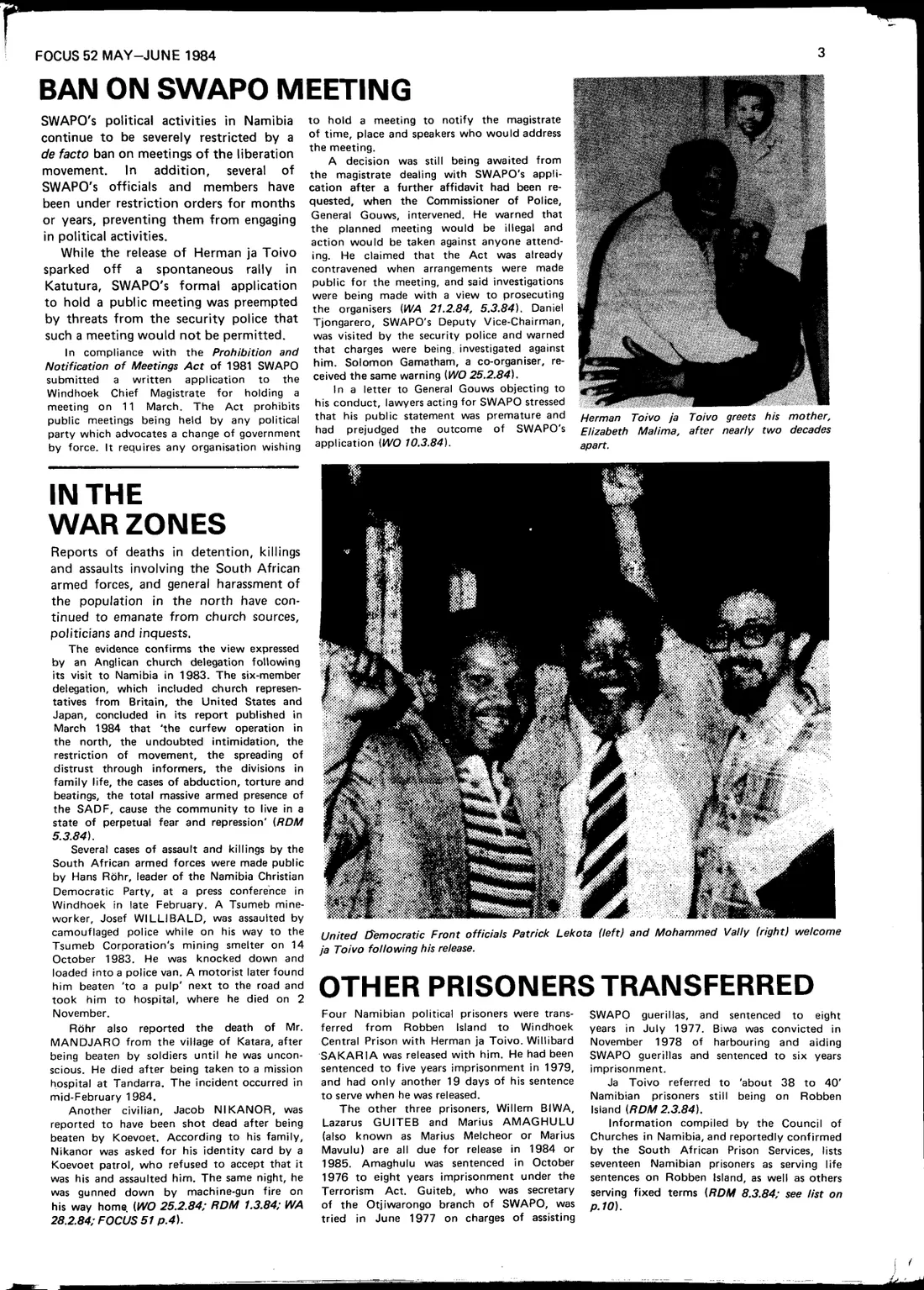
While the release of Herman ja Toivo sparked off a spontaneous rally in Katutura, SWAPO's formal application to hold a public meeting was preempted by threats from the security police that such a meeting would not be permitted.
In compliance with the Prohibition and Notification of Meetings Act of 1981 SWAPO submitted a written application to the Windhoek Chief Magistrate for holding a meeting on 11 March. The Act prohibits public meetings being held by any political party which advocates a change of government by force. It requires any organisation wishing to hold a meeting to notify the magistrate of time, place and speakers who would address the meeting.
A decision was still being awaited from the magistrate dealing with SWAPO's application after a further affidavit had been requested, when the Commissioner of Police, General Gouws, intervened. He warned that the planned meeting would be illegal and action would be taken against anyone attending. He claimed that the Act was already contravened when arrangements were made public for the meeting, and said investigations were being made with a view to prosecuting the organisers. Daniel Tjongarero, SWAPO's Deputy Vice-Chairman, was visited by the security police and warned that charges were being investigated against him. Solomon Gamatham, a co-organiser, received the same warning.
In a letter to General Gouws objecting to his conduct, lawyers acting for SWAPO stressed that his public statement was premature and had prejudged the outcome of SWAPO's application.